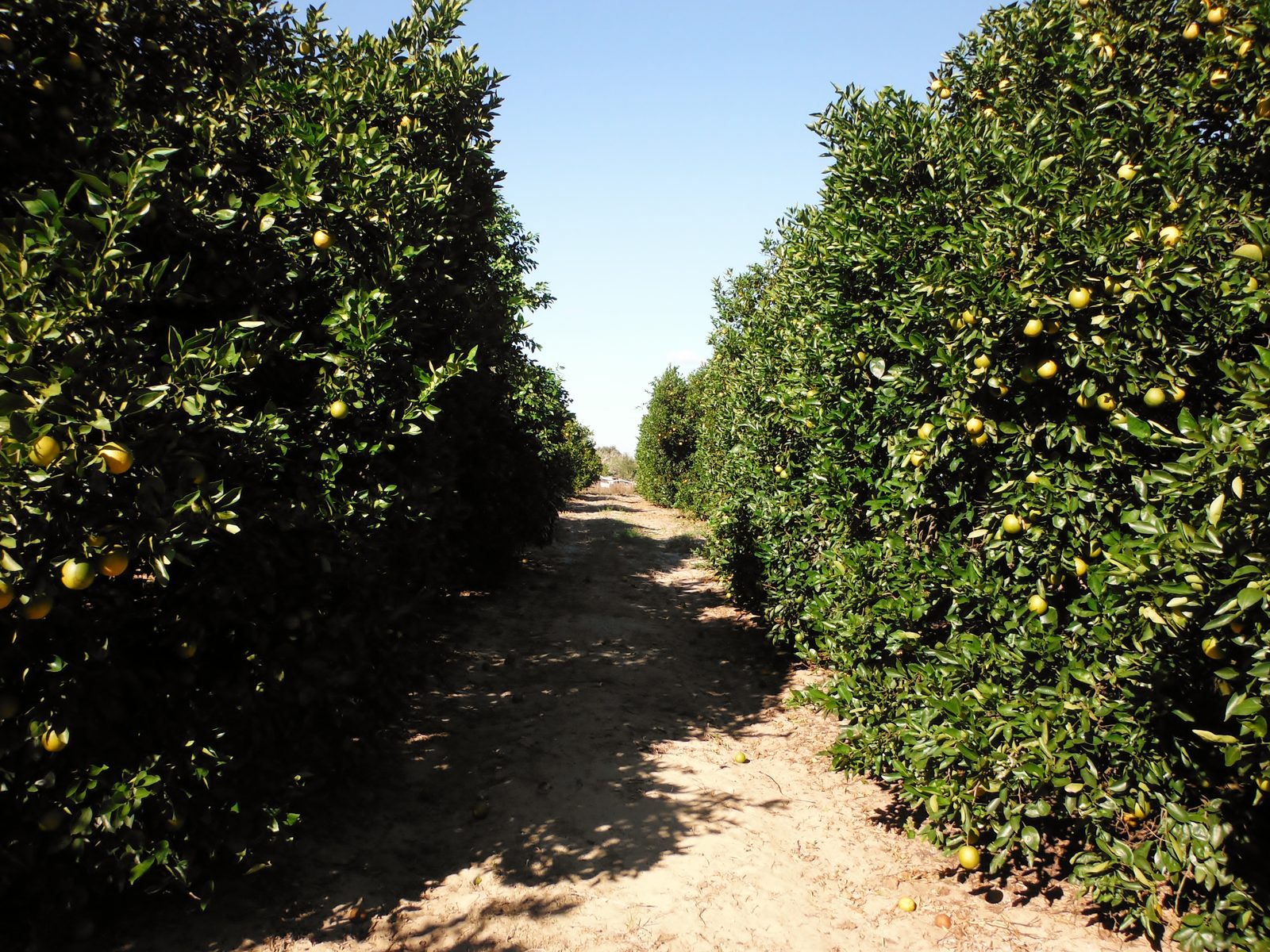
The name Indian River, on a crate of oranges or grapefruit, told a buyer where the fruit came from and what to expect of it. Fort Pierce and the surrounding lands of St. Lucie County sat at the heart of the district. For the better part of a century, the citrus industry was the economic backbone of the community, employing thousands of workers, supporting an infrastructure of packing houses and rail lines, and giving the Fort Pierce area an identity that reached far beyond the borders of Florida. The story of Indian River citrus is a story of agricultural ingenuity, natural advantage, and punishing setbacks.
Origins: citrus comes to the Indian River
Citrus was not native to Florida. Spanish explorers and missionaries introduced orange and lemon trees to the peninsula in the sixteenth century, and feral groves (descended from Spanish plantings and spread by birds and wildlife) dotted the Florida landscape for centuries. However, organized commercial citrus cultivation in the Indian River region did not begin until the mid-to-late nineteenth century. Settlers who arrived after the Civil War and during the Reconstruction era found that the soils and climate along the Indian River Lagoon were remarkably well suited to growing citrus. The crop that came first along this shore was the pineapple; its Fort Pierce story, 1905 to 1911, is told in The Fort Pierce pineapple years.
The earliest groves in the Fort Pierce vicinity were planted in the 1870s and 1880s. Pioneers cleared hammock land (dense subtropical forest of live oak, cabbage palm, and tropical hardwoods) and planted seedling orange trees. These early groves were modest in size, often just a few acres, and their proprietors faced formidable challenges: isolation, lack of transportation infrastructure, insect pests, and the ever-present risk of cold weather. Yet the fruit found buyers, and word of the oranges growing along the Indian River began to spread.
The arrival of Henry Flagler's Florida East Coast Railway to the Fort Pierce area in 1894 changed how growers shipped their fruit. Before the railroad, citrus growers had to rely on steamboats plying the Indian River to ship their fruit, a slow and limited method. The FEC Railway provided a direct, fast connection to northern markets, New York, Philadelphia, Boston, and beyond. Refrigerated rail cars allowed fresh citrus to reach consumers in pristine condition. The railroad opened the northern markets, and the groves multiplied.
The Indian River advantage
Indian River citrus
Indian River citrus refers to oranges, grapefruit, and other citrus fruit grown in the Indian River District, a narrow strip of land along Florida's east coast stretching from Daytona Beach south to West Palm Beach. The district takes its name from the Indian River Lagoon, whose warm waters create a moderating microclimate that protects groves from frost and contributes to the high sugar content and thin skin for which Indian River fruit is famous. The Indian River Citrus League, established in 1931, has long promoted and protected the brand.
What set Indian River citrus apart was a combination of soil, water, and climate that was hard to replicate elsewhere. The Indian River Lagoon, a vast body of shallow, warm water running parallel to the coast, acted as a natural heat sink. On cold winter nights (when frost could destroy an unprotected grove) the lagoon radiated stored warmth, moderating temperatures in the adjacent groves by several critical degrees. This thermal buffering effect meant that citrus trees along the Indian River could survive cold snaps that devastated groves further inland or further north.
The soils of the Indian River ridge (the slightly elevated strip of land between the lagoon and the coastal marshes) were sandy, well-drained, and underlain by coquina limestone. These conditions stressed the trees just enough to produce fruit with thinner skin, higher juice content, and more concentrated sugars than citrus grown in the heavier soils of central and southwest Florida. The result was fruit that was visually appealing, intensely flavorful, and ideal for the fresh-fruit market. Indian River oranges and grapefruit were sold as premium table fruit, at premium prices, rather than as juice fruit for the processing plant.
The golden era of Fort Pierce citrus
The early decades of the twentieth century saw the Fort Pierce citrus industry expand dramatically. New groves were planted across St. Lucie County, and the community attracted ambitious farmers and entrepreneurs drawn by the promise of the citrus trade. Among the most prominent citrus families in the Fort Pierce area were the McCartys, whose groves and civic leadership helped shape the community for generations. Dan McCarty, who would go on to become the 31st Governor of Florida in 1953, grew up in a Fort Pierce citrus family and understood the industry intimately. Other established citrus families (the Lyons, the Harpers, the Floyds, and many others) built their fortunes and their reputations in the groves surrounding Fort Pierce.
By the 1920s and 1930s, St. Lucie County was one of the leading citrus-producing counties in Florida. The landscape west and south of Fort Pierce was dominated by orderly rows of orange and grapefruit trees stretching to the horizon. The groves were beautiful in their geometric precision, and during the blooming season, the fragrance of citrus blossoms perfumed the air for miles. This was the golden era of Fort Pierce citrus, a period of expansion, prosperity, and growing national recognition for the Indian River brand.
The citrus industry shaped every aspect of community life in Fort Pierce. It determined land use patterns, drove population growth, influenced local politics, and provided the tax base that funded schools, roads, and public services. The fortunes of the citrus crop affected the fortunes of the entire community. A good year in the groves meant prosperity for everyone; a freeze or a poor market sent ripples of economic distress through the town. For a broader look at how the citrus industry shaped the surrounding county, see the St. Lucie County historical record.
The packing houses
If the groves were the foundation of the Fort Pierce citrus industry, the packing houses were its engine. These large commercial facilities (some of them architecturally substantial concrete-block buildings) were where raw fruit was transformed into a marketable product. Fort Pierce and its environs were home to numerous packing houses operated by individual growers, cooperative associations, and corporate entities.
The packing house ran on an organized routine. Trucks and wagons brought bins of freshly picked fruit from the groves to the packing house, where the fruit was dumped onto conveyor belts and washed. Workers (many of them women) sorted the fruit by hand, removing damaged or substandard pieces. The remaining fruit passed through mechanical graders that sorted it by size. Each orange or grapefruit was individually stamped or labeled with the grower's brand, then carefully placed into wooden crates (later cardboard boxes) lined with tissue paper. The packed crates were stacked, loaded onto trucks or rail cars, and shipped to markets across the country.
The packing houses were major employers in Fort Pierce. During the harvest season, which typically ran from November through May, packing houses operated at full capacity, employing hundreds of workers. Many of these workers were women from the Fort Pierce community, including a significant number of African American women who formed the backbone of the packing house workforce. The work was skilled (experienced packers could assess the quality and grade of fruit by sight and touch in an instant) and it was also physically demanding, requiring long hours of standing, sorting, and lifting.
The names and labels of Fort Pierce packing operations became familiar to consumers across America. Brands like Indian River, Gold Label, and Sun Coast appeared on crates of premium citrus in grocery stores and fruit stands from New York to Chicago. Gift fruit shipping (the practice of sending boxes of Indian River oranges and grapefruit to friends and family as holiday gifts) became a major segment of the business and helped cement the reputation of Fort Pierce citrus as a luxury product.
The Great Freezes
The history of the Fort Pierce citrus industry cannot be told without reckoning with the freezes. Cold weather has always been the citrus grower's greatest enemy in Florida, and the Fort Pierce area, despite the moderating influence of the Indian River Lagoon, has endured devastating freeze events that destroyed groves, ruined crops, and reshaped the geography of the industry.
The Great Freeze of 1894-95 was the first catastrophic cold event to strike the Indian River citrus region. In December 1894, a severe freeze damaged groves throughout central and north Florida. Many growers believed their trees would recover, but a second, even more brutal freeze in February 1895 killed trees to the ground across much of the state. The Great Freeze effectively destroyed the citrus industry north of the Indian River region and shifted the center of Florida citrus production southward. Ironically, the Fort Pierce area benefited from this shift, as growers from further north relocated to the warmer Indian River corridor.
The twentieth century brought its own litany of devastating freezes. The freeze of December 1962 inflicted significant damage on Fort Pierce area groves. But the most destructive sequence came in the 1980s. The Christmas freeze of 1983 was followed by another severe freeze in January 1985, and yet another in December 1989. These back-to-back-to-back events were catastrophic for the Fort Pierce citrus industry. Trees that might have recovered from a single freeze event were killed outright by the repeated cold. Entire groves were lost, and many growers, facing the enormous cost of replanting and the years-long wait before new trees would bear fruit, chose to sell their land rather than rebuild.
The freezes of the 1980s accelerated a geographic shift that had been underway for decades: the movement of the Florida citrus industry southward, away from the freeze-prone northern and central regions toward the more reliably warm areas of southwest Florida, primarily Hendry, Collier, and DeSoto counties. St. Lucie County, which had been one of the top citrus-producing counties in Florida, saw its acreage decline sharply. Land that had been covered in orange groves was sold for residential and commercial development, permanently altering the landscape of the Fort Pierce area.
Disease challenges: canker and greening
As if the freezes were not enough, the Fort Pierce citrus industry has also contended with devastating diseases. Citrus canker, a bacterial disease caused by Xanthomonas citri, has appeared in Florida multiple times since its first detection in 1915. Canker causes unsightly lesions on fruit, leaves, and stems, making affected fruit unmarketable. Eradication efforts (including the controversial practice of destroying infected trees and all citrus trees within a specified radius) disrupted groves and angered growers throughout the Indian River region.
Even more damaging has been citrus greening, also known as Huanglongbing (HLB), a disease caused by the bacterium Candidatus Liberibacter asiaticus and spread by the Asian citrus psyllid, a tiny insect. First detected in Florida in 2005, citrus greening has devastated the state's citrus industry. Infected trees produce small, misshapen, bitter fruit and eventually decline and die. There is no cure for citrus greening, and the disease has spread to virtually every citrus-growing area in Florida. The impact on the Fort Pierce area's remaining citrus operations has been severe, further reducing an industry that was already diminished by freezes and development pressure.
The legacy of Indian River citrus in Fort Pierce
Today, the Fort Pierce citrus industry is a shadow of what it was during the golden era of the mid-twentieth century. The vast groves that once surrounded the city have largely been replaced by housing developments, shopping centers, and open rangeland. Many of the packing houses have been demolished or repurposed. The workforce that once revolved around the citrus harvest has moved on to other employment. Yet the legacy of Indian River citrus remains deeply embedded in the identity of Fort Pierce and St. Lucie County.
The Indian River Citrus League, established in 1931 and based for many years in the region, continues to promote and protect the Indian River brand. Indian River citrus is still grown commercially, though in greatly reduced volumes, and the Indian River name still commands a premium in the marketplace. Gift fruit operations continue to ship boxes of oranges and grapefruit to customers across the country during the holiday season, carrying on a tradition that dates back generations.
The citrus industry also left a physical and cultural imprint on Fort Pierce that endures. Street names, business names, and the very layout of the community reflect the citrus heritage. Families whose roots are in the citrus groves remain prominent in the area's civic and social life. The annual St. Lucie County Fair, historical exhibits at local museums, and community celebrations all honor the citrus tradition. The story of Indian River citrus (its rise, its struggles, and its enduring reputation) is inseparable from the story of Fort Pierce itself.
The interplay between citrus agriculture and the ecology of the Indian River Lagoon is explored in depth at Treasure Coast Ecosystems.